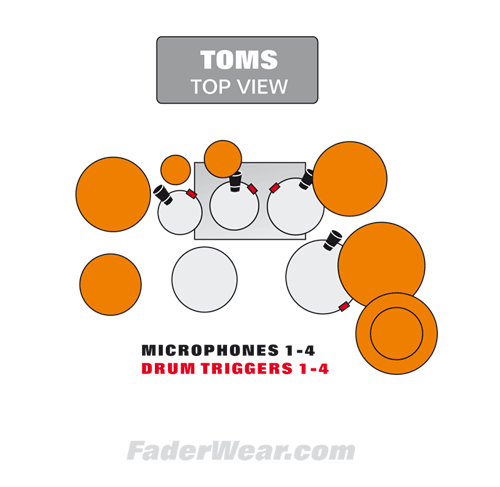
Toms are really easy to record if you know how to tune them and if you have some good mics. The microphones you choose are important, but not as important as the tuning. Just use decent dynamic microphones that have a tight polar pattern. I like to use kick drum microphones on floor toms, because of the low-end extension they have. You can use the same type of mic placement as with the snare. Just don't put mics under the toms. It is a waste of time.
One thing I really recommend is to not use those clips you can attach to the tom rim. The resonance you get from the shell will make the sound worse. Ok, some clips don't affect the sound that much, but I use stands anyway. It's also easier to find a good spot for the mic this way, especially with smaller toms.
Some microphones that are common on toms: Sennheiser E604/MD421, Shure SM57 and Audix D Series. If you use microphones with a hyper/supercardioid pattern, try to place them so that the backside of the mic is not pointing directly to cymbals.
When you are done with the toms, place a gate on each tom track. It will make the sound a lot cleaner to monitor. Just don't record the gated sound!
Separation
Cymbal bleed is your worst enemy here. Make the drummer raise his cymbals. It is the best and most secure way to prevent bleed. You can also use some baffles if you like.